
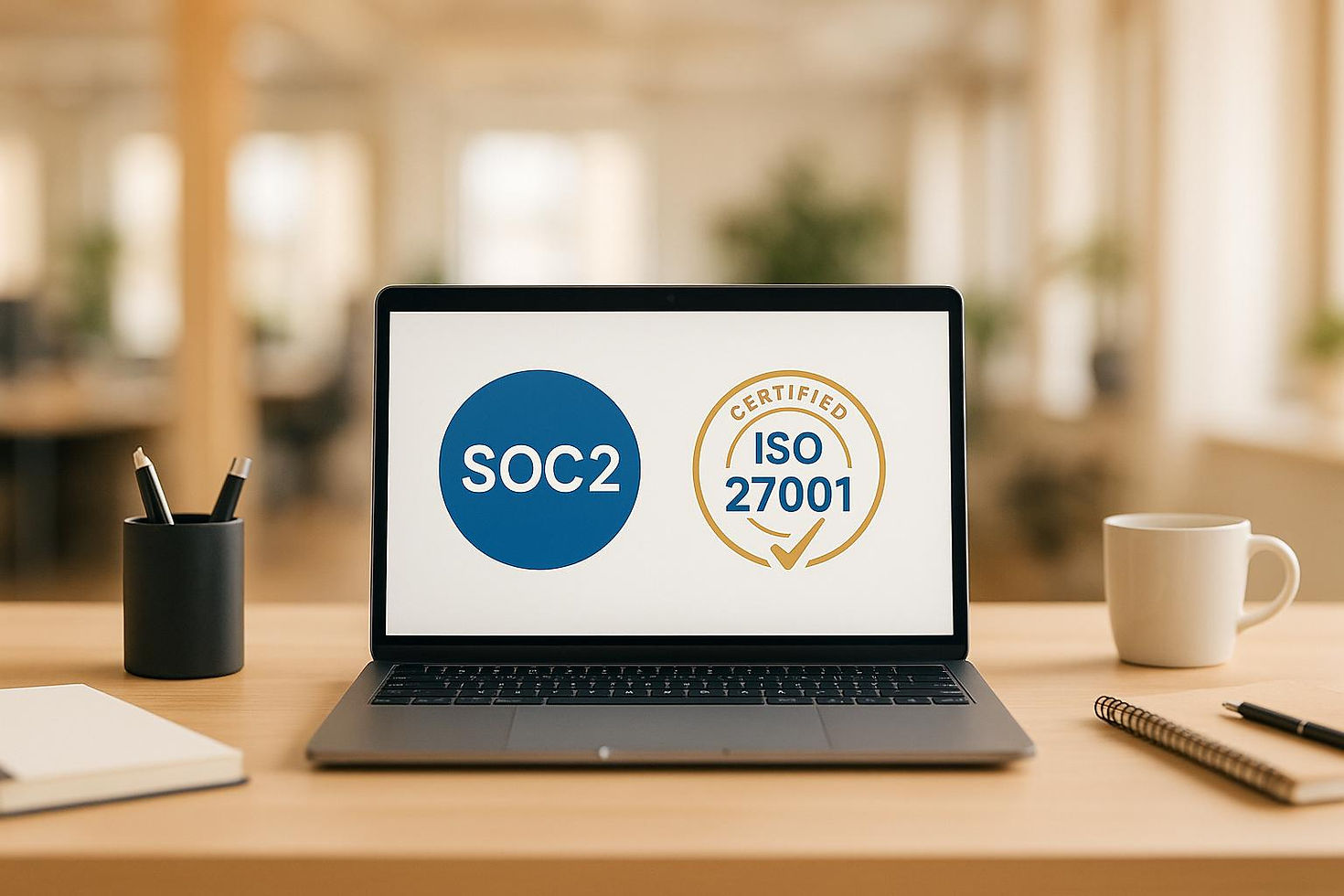
SOC 2 and ISO 27001 as Marketing Assets: Turn Compliance Into Credibility

SOC 2 and ISO 27001 certifications can do more than meet security requirements - they can help you win deals, build trust, and stand out in competitive markets. These certifications prove your organisation’s commitment to protecting client data and adhering to rigorous standards, which are increasingly important to buyers in industries like SaaS, fintech, and healthcare.
Here’s why they matter:
- SOC 2 focuses on managing customer data securely across five areas: security, availability, processing integrity, confidentiality, and privacy.
- ISO 27001 provides a global framework for managing information security, ensuring ongoing risk management and compliance.
Both certifications serve as trust signals that reassure prospects, shorten sales cycles, and open doors to enterprise and global markets. By integrating them into your branding, sales materials, and content, you can position your organisation as a security-first partner that prioritises data protection.
The key is to showcase these achievements effectively - on your website, in sales conversations, and through strategic marketing content. When done right, these certifications become a powerful tool to address buyer concerns and strengthen your competitive edge.
How SaaS Companies are Tackling SOC 2 and ISO 27001 in 2024 (Webinar)
What SOC 2 and ISO 27001 Mean for Your Marketing
Grasping the significance of SOC 2 and ISO 27001 certifications can be a game-changer for your marketing efforts. Let’s break down what each certification entails and why they matter.
SOC 2 (Service Organisation Control 2) is a US-based auditing standard that evaluates how a company manages customer data. It focuses on five key areas: and . Achieving SOC 2 certification shows that your organisation has implemented robust controls to safeguard client information and ensure reliable systems.
ISO 27001, on the other hand, is an internationally recognised standard for managing information security. It provides a structured framework to protect sensitive data through risk management, legal compliance, and ongoing improvement. This certification is respected globally and signals a strong commitment to security practices.
From a marketing standpoint, these certifications act as trust signals, reassuring potential clients about your dedication to protecting their data. They address a critical concern for B2B buyers: “Can we trust this company with our sensitive information?” Instead of relying solely on claims, these certifications offer third-party validation, giving your security measures added weight.
Displaying these certifications also has a psychological impact. They convey professionalism and credibility, especially to procurement teams, IT leaders, and compliance officers. In industries where data breaches can lead to severe financial and reputational damage, these certifications act as a safety net for buyers.
Benefits of SOC 2 and ISO 27001 Certifications
When it comes to marketing, these certifications aren’t just technical achievements - they’re strategic assets that influence buyer decisions and strengthen your competitive position.
- Faster sales cycles: Certifications like SOC 2 and ISO 27001 reduce the time prospects spend scrutinising your security practices. This is particularly valuable in enterprise sales, where security reviews can otherwise delay deals for weeks or even months.
- Stronger credibility with enterprise clients: Many large organisations require vendors to hold specific certifications before even considering them. Without SOC 2 or ISO 27001, you might be excluded from lucrative opportunities, regardless of how great your product is.
- Standing out in crowded markets: When competing against similar solutions, these certifications can tip the scales in your favour. They show that you’ve invested in robust security practices, which appeals to risk-averse buyers.
- Smoother procurement processes: Vendors with recognised certifications often face fewer hurdles during procurement. This can mean quicker contract approvals, less time spent on legal reviews, and fewer security questionnaires to fill out.
- Global market access: ISO 27001, in particular, is invaluable for companies looking to expand internationally. It’s widely respected in regions like Europe and Asia-Pacific, making it easier to enter new markets where security standards are a priority.
How to Choose the Right Certification
Deciding between SOC 2, ISO 27001, or both depends on your business goals and target audience. Here’s how to approach the decision:
- Geographic focus: If your primary market is North America, SOC 2 is often the go-to standard, especially in sectors like SaaS and cloud services. For companies targeting Europe or other global regions, ISO 27001 is usually more relevant, aligning well with European data protection laws.
- Industry norms: Different industries have varying expectations. For example, US-based financial and healthcare organisations often prioritise SOC 2, while manufacturing and government sectors may lean towards ISO 27001. Tech companies serving diverse markets may benefit from pursuing both.
- Resources and capacity: SOC 2 audits are conducted annually and focus on operational controls, while ISO 27001 requires ongoing management and periodic audits. Consider your team’s ability to maintain compliance when deciding which certification to pursue.
- Client demands: Review your sales pipeline to identify which certifications your prospects frequently request. If enterprise clients expect SOC 2 reports, prioritise that. If international clients place more value on ISO 27001, adjust accordingly.
- Operational complexity: For businesses with multiple locations or complex operations, ISO 27001’s comprehensive management system approach may be more suitable. For smaller, cloud-focused companies, SOC 2’s operational emphasis might be a better fit.
Choose the certification that aligns with your marketing strategy and meets the needs of your clients. These credentials not only strengthen your security posture but also become a powerful tool to build trust and drive business growth.
Adding Compliance to Your Brand Identity
After achieving your SOC 2 or ISO 27001 certification, the next logical step is weaving these credentials into the very fabric of your brand identity. This isn’t just about adding a badge to your website - it’s about repositioning your company as a security-first organisation that clients can confidently trust with their sensitive data.
When done well, these certifications become more than technical milestones; they transform into compelling marketing assets. They should be deeply integrated into your brand, shaping everything from your messaging to your visual identity. This approach ensures your certifications are seen not just as achievements but as cornerstones of your company’s value.
Updating Your Core Messages and Value Propositions
Your messaging must now reflect the security focus these certifications represent. It’s an opportunity to refine your brand voice, ensuring that trust, reliability, and security are at the heart of your value propositions.
For instance, your mission statement might evolve to include a clear focus on safeguarding client data or adhering to the highest security standards. Instead of saying, "We help businesses optimise their operations", you could say, "We help businesses optimise their operations while upholding enterprise-grade security and compliance."
Your website copy should echo this security-first philosophy throughout the customer journey. For example:
- Your homepage could feature a bold statement like, "Enterprise-grade security you can trust."
- Product pages should highlight specific security features tied to your certification, such as encryption, access controls, or audit trails.
The goal is to make security an integral part of your offering, not an afterthought. Prospective clients should feel that choosing your solution means prioritising their data’s safety.
Even small details, like email signatures, can reinforce this message. Adding a line such as "Proudly SOC 2 Type II certified" or "ISO 27001 certified for your peace of mind" ensures security remains front and centre in every interaction.
Designing Compliance Badges and Visual Elements
Your visual identity should also reflect your commitment to security. Compliance badges are powerful trust signals that can influence prospects within moments of landing on your website.
When designing these badges, ensure they align with your brand’s overall aesthetic while adhering to the official guidelines for SOC 2 and ISO 27001 logos. You can incorporate these logos into branded frames or backgrounds that match your colour palette, keeping them both professional and recognisable.
Strategic placement of these badges is key. Display them prominently in areas like:
- The website header or footer
- Pricing pages
- Contact forms
- Checkout or sign-up pages (where they can reassure users and reduce abandonment rates)
It’s also worth creating different badge variations for various contexts. For instance:
- A detailed version with certification specifics for your security or compliance page.
- A simplified design for your website header or email signatures.
- Mobile-friendly versions optimised for smaller screens.
In addition to badges, consider using trust seals or icons that highlight your broader security measures, such as encrypted data, secure servers, or regular audits. These visuals should complement your certification badges, reinforcing your commitment to data protection without competing for attention.
Your sales materials should also feature these visual elements consistently. For example, a slide in your sales deck showcasing your certifications alongside client testimonials about security can leave a lasting impression during procurement discussions.
Finally, ensure these visual assets work seamlessly across both digital and print mediums. Whether they appear on a website, in a brochure, or in a PDF proposal, your designs should be clear, professional, and impactful. The aim is to create a unified visual language that underscores your security credentials at every customer touchpoint.
Displaying Compliance Across Marketing Channels
After weaving compliance into your brand’s identity, the next challenge is making sure your audience sees and understands these credentials - no matter how they interact with your business. Certifications like SOC 2 and ISO 27001 act as trust signals, reassuring customers about your commitment to security and data handling. But showcasing them effectively requires strategic placement that feels natural. These certifications should appear where they can address potential security concerns and build confidence throughout the customer journey. Below, we’ll explore practical ways to seamlessly integrate these credentials across both digital and print platforms, reinforcing the trust your brand promises.
Adding Certifications to Digital Platforms
Your website is a prime location to showcase compliance. Display certification badges on every page and create a dedicated compliance section explaining what each certification means for your clients. On product pages, go beyond generic terms like "data encryption." Instead, use phrases like "enterprise-grade data encryption, verified by our SOC 2 certification" to drive the message home.
Email campaigns are another opportunity. Add certification badges to email footers and use newsletters to highlight security updates. When introducing new features or services, mention how they align with your certified security standards.
For B2B marketing, LinkedIn is essential. Include your certifications in your company description and share updates about security practices or compliance milestones. Employees can amplify this message by noting their association with a SOC 2 or ISO 27001 certified organisation on their profiles.
When responding to proposals or RFPs, include a dedicated "Security and Compliance" section. This should detail your certifications and explain how they benefit prospective clients. Additionally, producing SOC 3 reports can serve as an accessible marketing tool for potential customers, offering a simplified overview of your compliance credentials.
While digital channels provide flexibility and reach, print materials still hold value in certain interactions.
Including Certifications in Print Materials
Despite the dominance of digital marketing, print materials remain crucial for face-to-face meetings and formal business settings - especially when security is a key discussion point.
Incorporate small certification logos on business cards and feature them prominently on brochures. This not only sparks conversations about your security practices but also reinforces your commitment to compliance.
Sales presentations are another opportunity. Instead of relegating compliance credentials to a single slide, weave them throughout the presentation. For instance, when discussing your solution’s benefits, highlight how specific features are backed by SOC 2 or ISO 27001 compliance.
Trade shows are ideal for showcasing certifications too. Include compliance badges on banners alongside your logo and key messaging. Handouts can provide more detailed explanations about what these certifications mean for your clients. Even direct mail campaigns - though less common in B2B - can effectively communicate your security-first approach by including certification details.
The key is to maintain consistency between your digital and print messaging. Certifications should feel like an integral part of your value proposition, not an afterthought. Every interaction, whether online or in person, should reinforce your organisation’s commitment to security.
As AuditBoard highlights:
As the demand for cloud-based solutions increases, SOC 2 attestation continues to be seen as the industry standard, setting apart SaaS solutions with SOC 2 audits completed from companies that do not. [1]
Using Compliance in Sales and Content
Your certifications are more than just badges - they’re powerful tools to strengthen trust and credibility. By incorporating them into your sales strategy and content, you can address buyer concerns and showcase your organisation’s dedication to security and compliance.
Bringing Up Compliance in Sales Meetings
Don’t wait for prospects to ask about security - bring up compliance from the start. Highlight your certifications during early discussions about your company’s value. For example, when introducing your organisation, mention how your certifications reflect your commitment to safeguarding data.
Discovery calls are another great opportunity. When prospects mention concerns like data protection, regulatory requirements, or past security issues, use this as a natural opening. For instance, if someone raises a question about data handling, you might say:
Position certifications as enablers of smoother business operations. For example:
During proposal presentations, make compliance a focal point. Include a slide that outlines your certification timeline and explains the rigorous audits involved. This not only demonstrates your commitment but also reassures prospects that compliance is an ongoing priority, not a one-time effort.
Equip your sales team with tailored talking points for different audiences. IT decision-makers will want details about technical controls, while procurement teams may focus on risk mitigation and compliance requirements. These tailored approaches naturally complement your content strategy, which can further validate your security credentials.
Writing Content That Highlights Compliance
Content marketing is a great way to reinforce your compliance message. The aim is to educate prospects and build trust by addressing their concerns, rather than simply listing your certifications.
Case studies are particularly effective for showing how your compliance status has benefited real clients. For example, detail how your certifications helped a client meet regulatory requirements or pass a vendor security review. Share the challenges they faced, how your compliance addressed their concerns, and the outcomes they achieved.
Whitepapers allow you to dive deeper into compliance topics while positioning your organisation as an expert. Examples could include titles like or These papers showcase your knowledge and subtly reinforce your certified status.
Blog posts can tackle common security questions your prospects have. Write about topics like or This type of content helps prospects make informed decisions while demonstrating your expertise.
Videos can simplify complex compliance topics. Short explainers about what your certifications mean for clients or customer testimonials discussing how your compliance influenced their decision can be highly engaging.
When creating compliance-focused content, keep the language straightforward and relatable. Focus on the practical benefits for clients, like better data protection, reduced risks, and easier regulatory compliance.
Email nurture sequences are another effective way to educate prospects. Create a series of emails that gradually explain your security programme, with each email building on the last. This creates a clear, comprehensive picture of your commitment to compliance.
Proactively addressing buyer concerns through content is key. Research the common security questions in your industry and create materials that answer them before prospects even ask. This approach not only builds trust but also positions your organisation as a transparent and reliable partner throughout the buying process.
Conclusion: Making Compliance Work for Your Business
SOC 2 and ISO 27001 aren't just about meeting standards - they're tools that can set your business apart. When used effectively, these certifications can address potential buyer concerns before they even arise, giving you a competitive edge.
To maximise their impact, weave these credentials into your brand's DNA. Highlight them on your website, include them in email signatures, and bring them up during sales conversations. They should also play a central role in your content strategy, serving as a solid base for case studies, whitepapers, and thought leadership materials.
Consistency matters. Every interaction - whether it's a LinkedIn post, a presentation, or a sales call - should reinforce your commitment to security and operational excellence. This unified message helps build trust and credibility across all touchpoints.
The businesses that excel at compliance marketing focus on educating their audience. They show how their certifications solve real challenges for clients, using detailed explanations and practical examples. By addressing security concerns head-on and sharing stories of how their compliance has made a difference, they build confidence and trust.
Ultimately, your investment in SOC 2 and ISO 27001 is more than just a box-ticking exercise. It’s a commitment to best practices that protects your business, strengthens client relationships, and fuels growth. These certifications can help you win more deals, justify premium pricing, and establish long-term trust with your audience.
FAQs
How can achieving SOC 2 and ISO 27001 certifications enhance our marketing efforts?
Achieving SOC 2 and ISO 27001 certifications is a powerful way to strengthen your marketing message. These certifications demonstrate your organisation's commitment to safeguarding data and adhering to strict compliance standards. For industries like SaaS, technology, and finance, where data security is a critical concern, this can significantly boost trust and credibility.
Incorporating these credentials into your marketing materials, online campaigns, and sales presentations directly addresses buyer concerns about data protection. It positions your company as a dependable and forward-thinking partner, helping you stand out in competitive markets. Beyond that, it lays the groundwork for building strong, lasting client relationships.
What are the main differences between SOC 2 and ISO 27001, and how do we choose the right certification for our business?
SOC 2 and ISO 27001 cater to different needs and markets. SOC 2 zeroes in on operational security controls, offering detailed reports that show how these controls are applied. It’s especially relevant for businesses aiming to work with clients in the United States.
On the other hand, ISO 27001 is an internationally recognised standard that sets up a structured management system for information security. Thanks to its global reach, it’s particularly relevant for organisations operating in the UK or serving a worldwide client base.
When deciding between the two, think about your audience. If you’re targeting clients in the UK or across the globe, ISO 27001 might be the better option because of its international appeal. But if your business is US-focused, SOC 2 aligns more closely with what American clients expect in terms of operational security. Your decision should ultimately reflect where your clients are located and what compliance standards they prioritise.
How can we use our SOC 2 or ISO 27001 certifications to strengthen our brand and marketing efforts?
To maximise the impact of your SOC 2 or ISO 27001 certifications, incorporate them into your branding and marketing efforts to build trust and stand out in your industry. Display certification badges prominently on your website, email footers, and sales materials. These visual cues immediately communicate your dedication to security and compliance.
Use messaging that underscores these certifications as evidence of your reliability and expertise, especially in sectors where data protection is critical. This approach not only reassures clients about compliance but also positions your business as a trustworthy and secure partner. By integrating these certifications into your brand narrative, you can transform compliance into a compelling advantage that appeals to B2B clients.


Comments